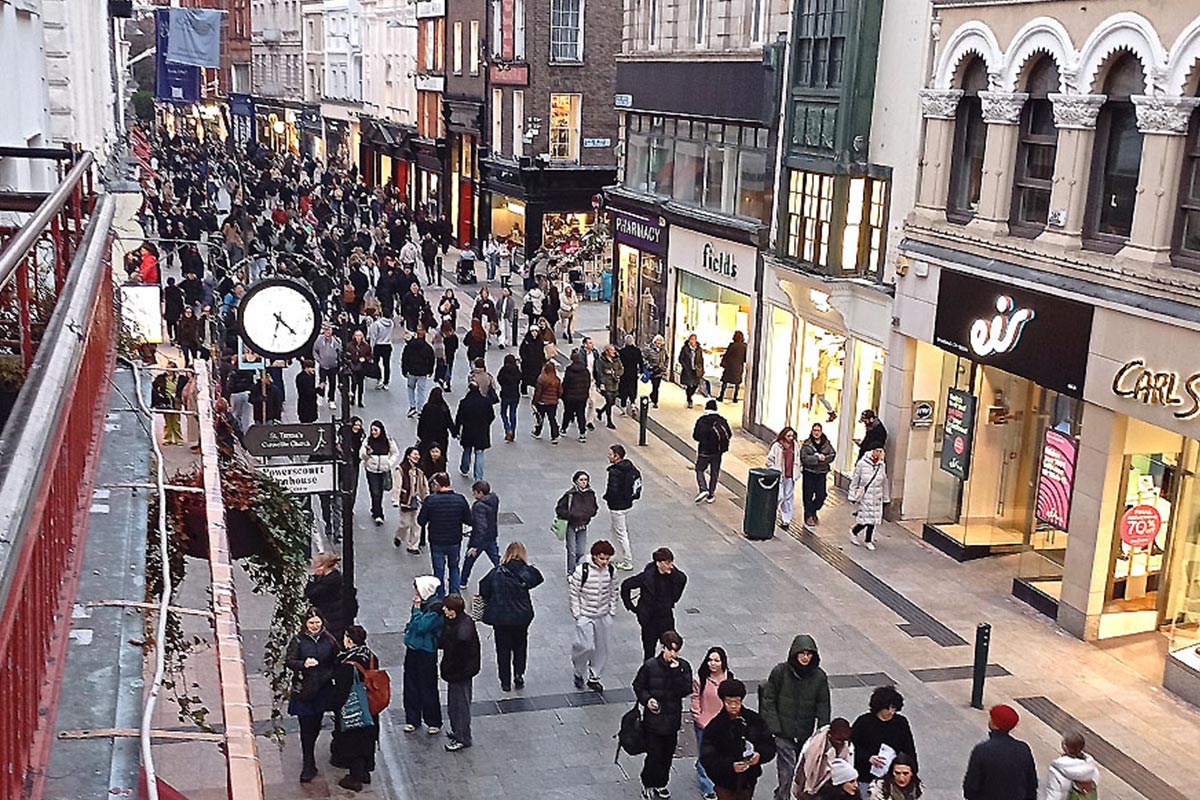
Dublin is Ireland’s capital and one of the most friendly fun cities to visit in Europe, if not the world! Dubliners and Irish people are renowned for their vibrant sense of humor, sharp wit, and always ‘Up for the Craic’ (A Good Time). We’re not called the land of a thousand welcomes for nothing.
Boasting an incredible history – from Celtic roots and Viking settlements to Norman conquests and English occupation – Dublin has seen it all! While rebellion and revolution have shaped our past, the city today exudes an ever-increasing diversity of culture and creativity.
Our language and heritage are interwoven into everyday life, reflected in the passion of our National Sports, Hurling and Gaelic football, as well as our rich literary and musical traditions. Traditions we’ve been proud to share with the world for centuries. Yes, Ireland truly is a land of a thousand welcomes!
And as a vibrant capital, Dublin is a city of a million stories and more, just waiting to be told. With countless adventures to be had, there’s no shortage of experiences to dive into. So let’s look at some of Dublin’s must-sees and dos.
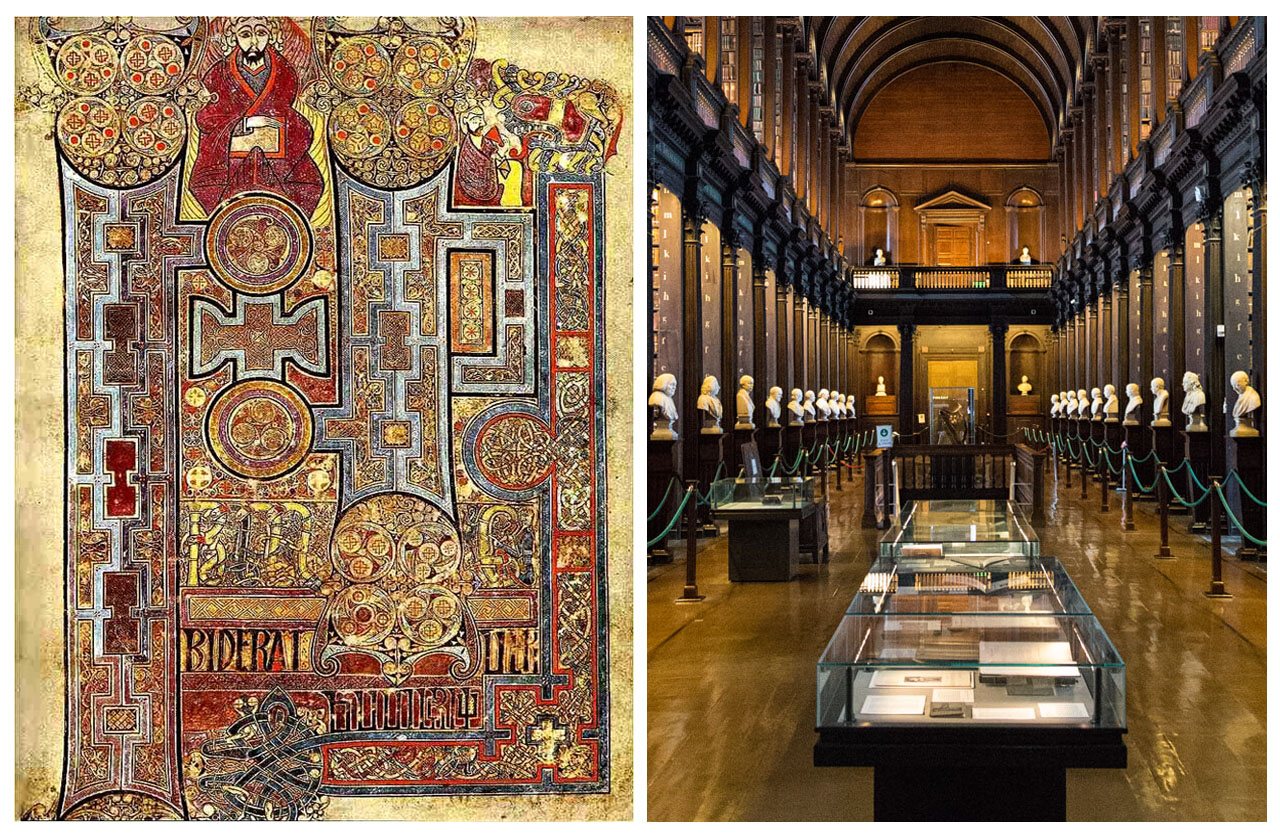
The Book of Kells is one of Dublin’s must-see attractions and remains one of the world’s most magnificent medieval manuscripts. It was created by the monks of St. Colum Cille (Columba) at their monastery on the island of Iona in Scotland around 800 CE. After repeated Viking raids on the monastery– in one brutal attack in 806 CE, 70 monks were killed – the book was brought to Ireland for safekeeping along with other precious relics. Although there is no definite confirmation of the exact date when the book came to Ireland, it is believed to be somewhere within the 9th century. We can imagine a perilous journey made by monks in an open boat to their sister monastery in Kells, Ireland. Here the book would have been carefully protected as a sacred text and as a relic of St. Colum Cille.
During the mid-17th century, a period marked by extreme brutality and violence in Ireland, the town of Kells experienced severe hardships. In an effort to safeguard the book, the town’s governor, the Earl of Cavan, sent it in 1653 to Dublin Castle. By the 1660s, the Anglican Bishop of Clogher, Henry Jones, had it transferred to Trinity College Dublin, where it has remained since. A testament to a long journey of divine providence, methinks. A bit like Caravaggio’s The Taking of Christ, a story for another day, or perhaps when you’re on one of my Private Walking Tours.
Today the manuscript can be seen at Trinity College’s Old Library, also known as the Long Room. This spectacular 65-meter-long gallery was constructed between 1712 and 1732. Currently, the library is undergoing a landmark redevelopment; over 200,000 books have been vacuumed, tagged, and moved to climate-controlled storage to protect them from dust and decay during structural restoration. In 1860, architects added the distinctive barrel-vaulted ceiling to accommodate growing collections. Additionally, 44 marble busts line the central walkway. The collection began in 1743 with a commission from sculptor Peter Scheemakers. While the collection was exclusively male for over 250 years, four busts of prominent women were added in 2023.
Beyond the Book of Kells, the Long Room holds the 15th-century Brian Boru Harp, also known as the Trinity Harp. It is the oldest of its kind in Ireland. Although Brian Boru died in 1014, his name may have become synonymous with this particular harp as a symbol of our heroic Celtic past. The Irish harp also serves as Ireland’s national emblem.
In addition, visitors to the Long Room can view a rare original copy of the 1916 Proclamation of the Irish Republic. There is believed to be less than 50 original proclamations remaining. Trinity College holds two of them.
Famous alumni who’ve utilized the Library include Jonathan Swift, author of Gulliver’s Travels; Bram Stoker, of Dracula fame; Samuel Beckett, Nobel Prize-winning playwright; Oscar Wilde, renowned playwright of The Importance of Being Earnest; and James Joyce, celebrated author of Ulysses.
I highly recommend The Book of Kells Experience. It’s a self-guided journey featuring an excellent free digital audio app. It also combines a viewing of the manuscript with immersive 360-degree digital projections in the Red Pavilion. The whole experience takes around 90 minutes in total.
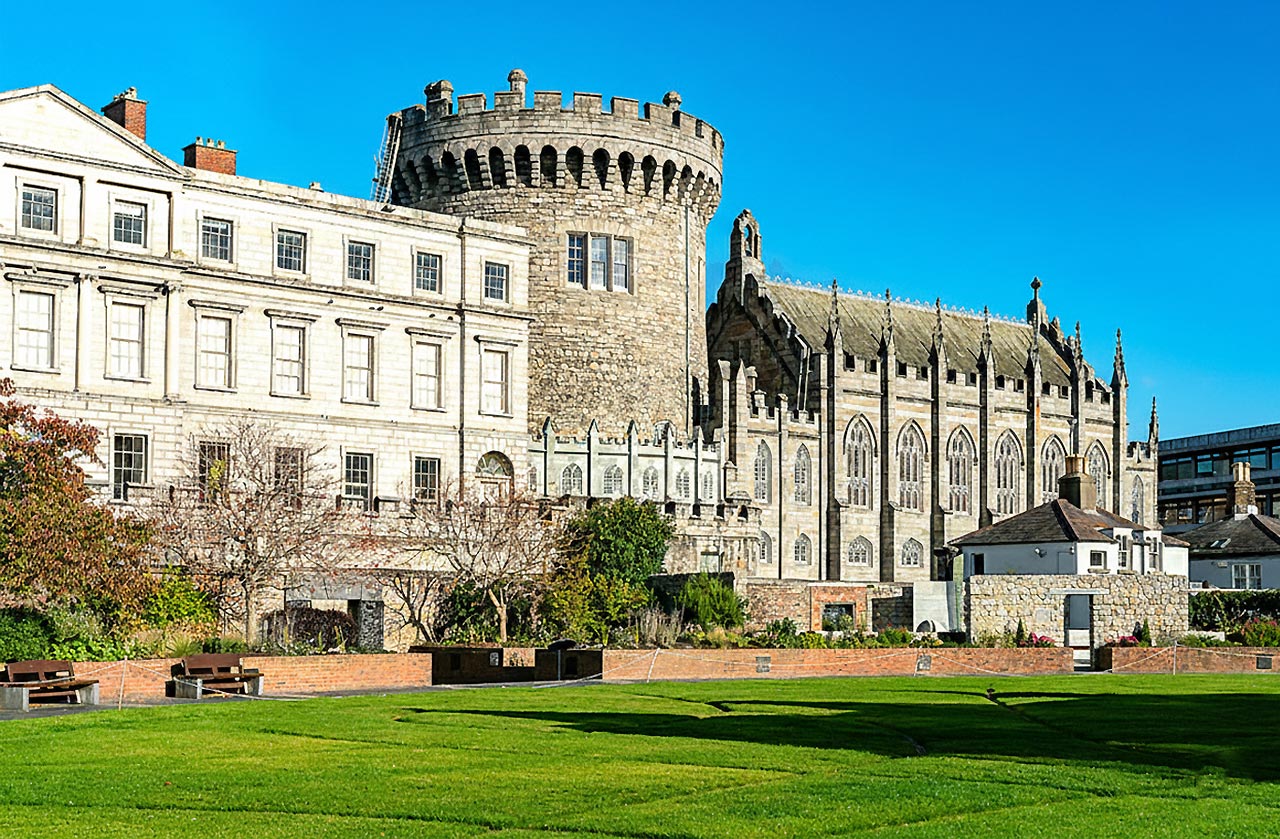
Dublin Castle stands within the medieval heart of the city, initially a stronghold of British rule in Ireland for over 700 years. On January 16, 1922, the last Viceroy—the representative of the English monarch—handed the Castle over to Michael Collins and the newly independent Irish government. Constructed as a medieval fortress from 1204 to 1229 under the command of King John I, The original castle featured four corner towers connected by high curtain walls and a central keep. Today, the 13th-century Record Tower remains the only intact medieval feature, while the majority of the Castle complex reflects 18th-century Georgian architecture, rebuilt after a catastrophic fire in 1684.
This new structure incorporated grand reception rooms known as the State Apartments, which still define the interior today. Lavishly decorated, these rooms once hosted vice-regal ceremonies and welcomed dignitaries such as Benjamin Franklin, Queen Victoria, and Charles Dickens.
Dublin castle holds many, secrets, including the whereabouts of The Irish Crown Jewels, stolen in 1907 and still un-recovered to this day. Some legendary figures associated with the castle include Red Hugh O Donnell an Irish chieftain, who made daring escapes from the castle in 1591 and 1592 after 5 years of imprisonment. Famous rebellion leader of 1803 Robert Emmet interrogated in Dublin Castle along with his accomplice Anne Devlin who was severely tortured there. James Connelly kept in the castle’s state apartments – then a temporary Red Cross hospital – after being severely wounded in the 1916 Easter Rising; he was held there prior to his execution.
Margaret Ball, who, as Lady Mayoress, was imprisoned – by her own son Walter – for refusing to abandon her Catholic faith and ultimately died there in 1584 after spending over 3 years in the dungeons. Its said she left her fortune to Walter, proving that Irish mammies are the best mammies in the world. Pope John Paul II in 1992 beatified Margaret Ball as a saint. Bishop Dermot O’Hurley was also beautified on the same day. He had been captured in 1583 and was severely tortured for over a year at Dublin Castle before being executed in 1534. One of the most infamous tortures used on Bishop O’ Hurley was known as the Boots!
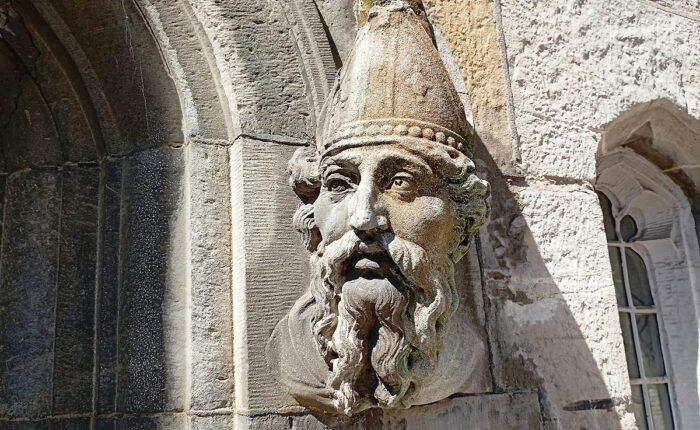
Since 1922, the Irish government has entertained world-famous guests, including Princess Grace of Monaco, John F. Kennedy, Charles de Gaulle, and Nelson Mandela to name but a few. St. Patrick’s Hall, the most opulent of the State Apartments, has been the venue for the inauguration of Ireland’s presidents since 1938. Adjacent to it is the Chapel Royal, a Gothic Revival masterpiece completed in 1814, renowned for its intricate oak carvings and over one hundred stone heads that adorn the buildings exterior, from St Patrick to St Peter, and Queen Victoria to Brian Boru.
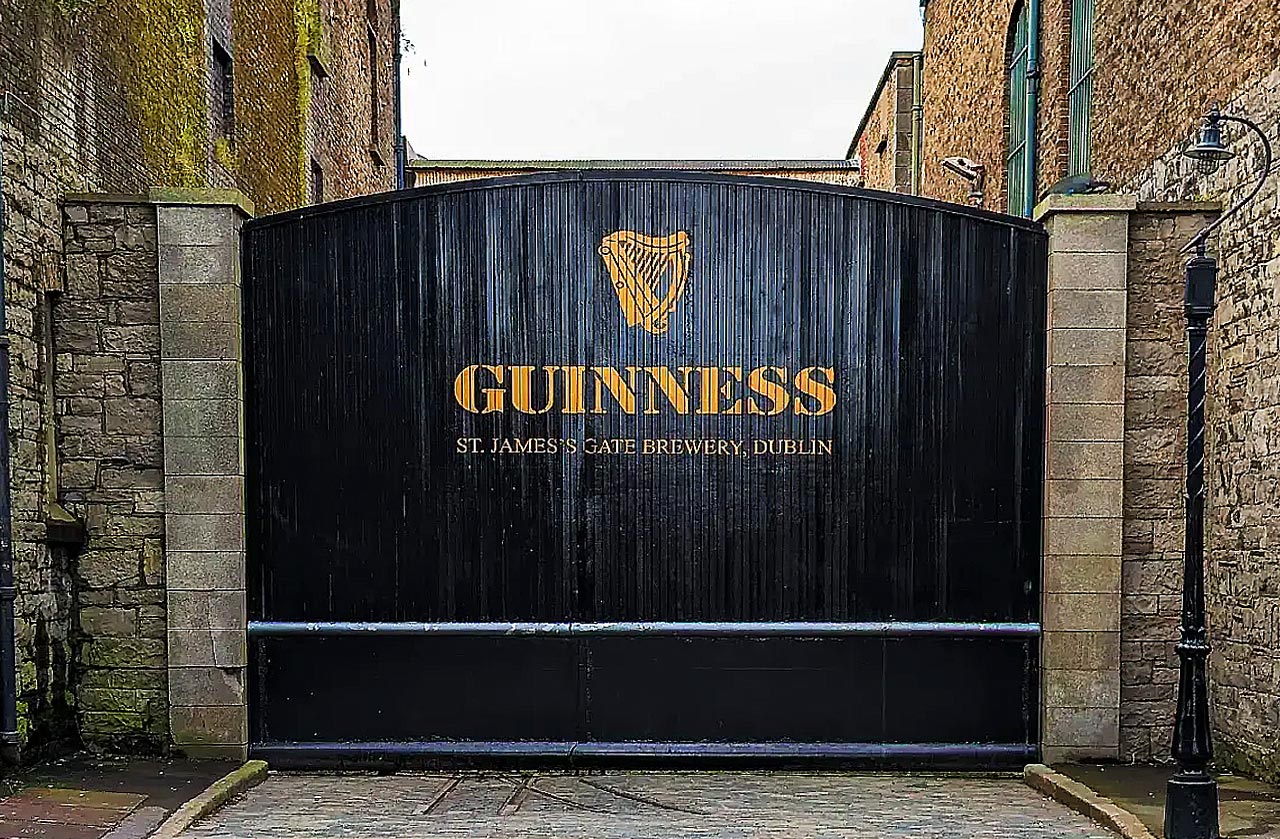
The Guinness Storehouse at St. James’s Gate stands as the global heart of Ireland’s most famous export. Originally, workers built the site as a fermentation plant in 1904. The building represents a Chicago-style architectural feat. It features a massive internal steel frame that supports seven floors. Notably, the core of the structure mimics the shape of a giant pint glass. If filled, this atrium would hold approximately 14.3 million pints of stout. Arthur Guinness signed a legendary 9,000-year lease on the site in 1759. He paid an annual rent of only £45. This agreement proved his long-term vision for the brewery. By the late 19th century, the site became the world’s largest brewery. Consequently, it shaped the industrial and social fabric of Dublin’s Liberties district.
The visitor experience centers on the “Black Stuff’s” primary ingredients. These include water from the Wicklow Mountains, hops, barley, and a proprietary yeast strain. A major highlight is the Tasting Rooms. Here, multisensory “aroma fountains” isolate the distinct scents of the brewing process. Furthermore, the Guinness Academy on the fourth floor teaches visitors the six-step ritual of the “Perfect Pour.” This process must take exactly 119.5 seconds to settle correctly. The journey concludes at the Gravity Bar. This glass-walled observation deck provides a 360-degree panorama of the Dublin skyline. Additionally, the Storehouse houses an extensive archive of Guinness advertising. This collection includes the iconic toucan and “Guinness is Good for You” campaign.
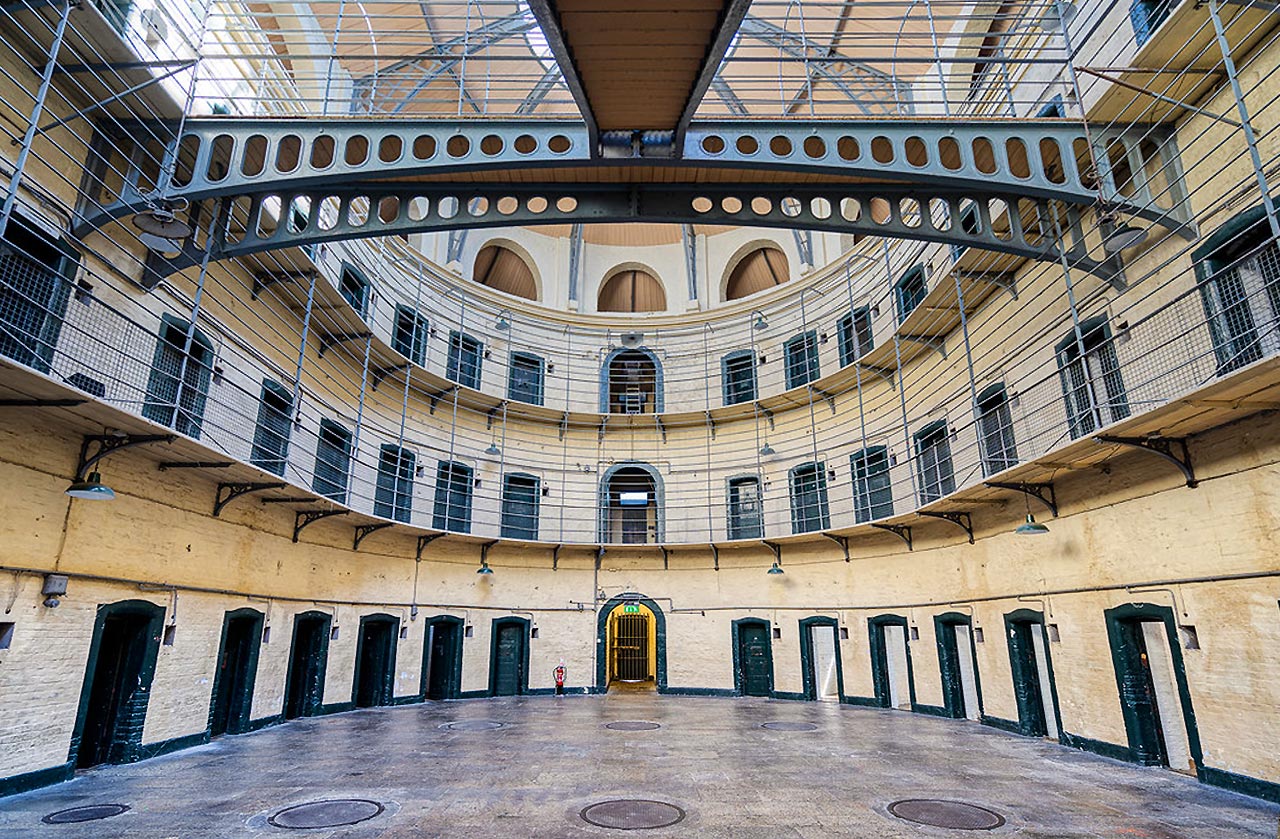
Opened in 1796 as the “New Gaol,” Kilmainham Gaol remains one of Europe’s largest unoccupied prisons. It serves as a powerful monument to Irish nationalism and historical suffering. For over 125 years, the facility held ordinary citizens alongside prominent independence leaders. Notably, the prison’s history is inextricably linked to the 1916 Easter Rising. Within these limestone walls, British forces executed fourteen rebellion leaders, including Patrick Pearse and James Connolly. These executions occurred in the Stonebreaker’s Yard. Consequently, the events shifted public opinion and catalyzed the formation of the Irish Free State. During the Great Famine, the gaol became severely overcrowded. Many people committed petty crimes specifically to secure the meager food rations provided to inmates.
The architecture of Kilmainham reflects evolving penal philosophies. Specifically, the East Wing features a quintessential Victorian “panopticon” design. Added in 1861, this vast limestone hall contains three tiers of cells encircling a central viewing point. This layout ensured prisoners felt constantly observed. Furthermore, officials called this “moral architecture” to encourage silent reflection and reform. In contrast, the West Wing remains a dark relic of 18th-century dungeon design. The facility was officially decommissioned in 1924 following the Irish Civil War. It narrowly escaped demolition before a 1960s restoration saved the site. Today, it stands as a witness to the political upheavals of modern Ireland. The museum now houses personal belongings, letters, and political ephemera from its former occupants.
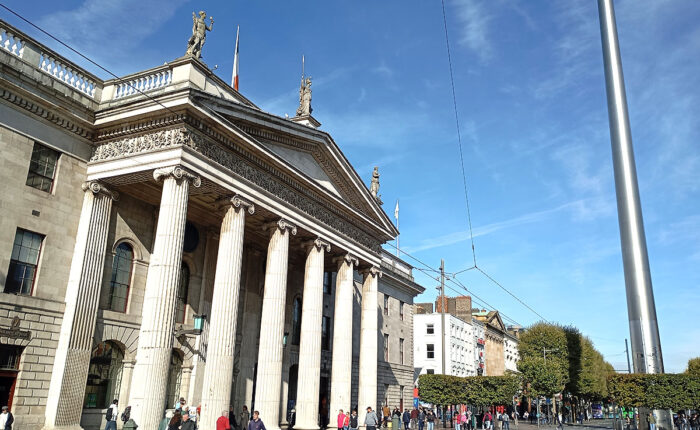
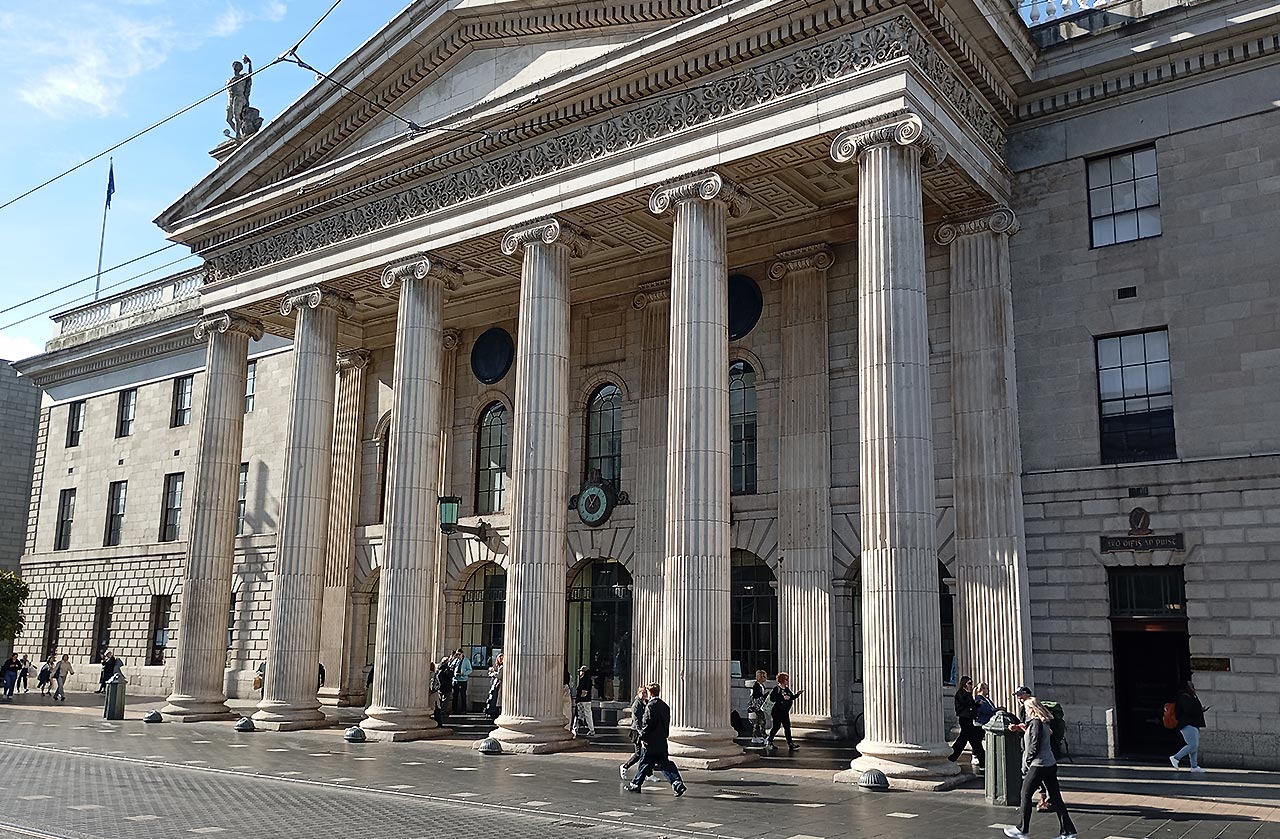
The General Post Office (GPO) on O’Connell Street is one of the most iconic buildings in Irish history. Significantly important as it served as the headquarters for the 1916 Easter Rising. Designed as a post office by Francis Johnston in a Neo-Classical style from 1814 -1818. The facade features a massive portico with six fluted Ionic columns.
On Monday April 24, 1916, Padraig Pearse stood beside these columns and read the Proclamation of the Irish Republic. During the following week of fighting, British tank and gun boat artillery heavily bombarded the building. This caused a massive fire that completely destroyed the interior. However, the original facade surprisingly remained intact and survived the destruction. Today, visitors can still see bullet holes in the stone pillars.
Beyond its revolutionary role, the GPO remains a functional post office. It acts as an architectural anchor for Dublin’s main thoroughfare. Architects meticulously rebuilt the interior in the 1929. It now features an elegant Art Deco public office that maintains its original purpose.
Inside the central courtyard and below, the “Witness History” exhibition provides an immersive account of the Rising. The museum uses artifacts and survivors’ testimonies to tell the story.
The main hall features a bronze statue of Cú Chulainn, one of our Irish warrior heroes from the Ulster Cycle of Irish mythology. The statue serves as a memorial to those who died during the the 1916 Rising. Today the GPO continues to host significant state commemorations and public gatherings in memory of our tumultuous history.
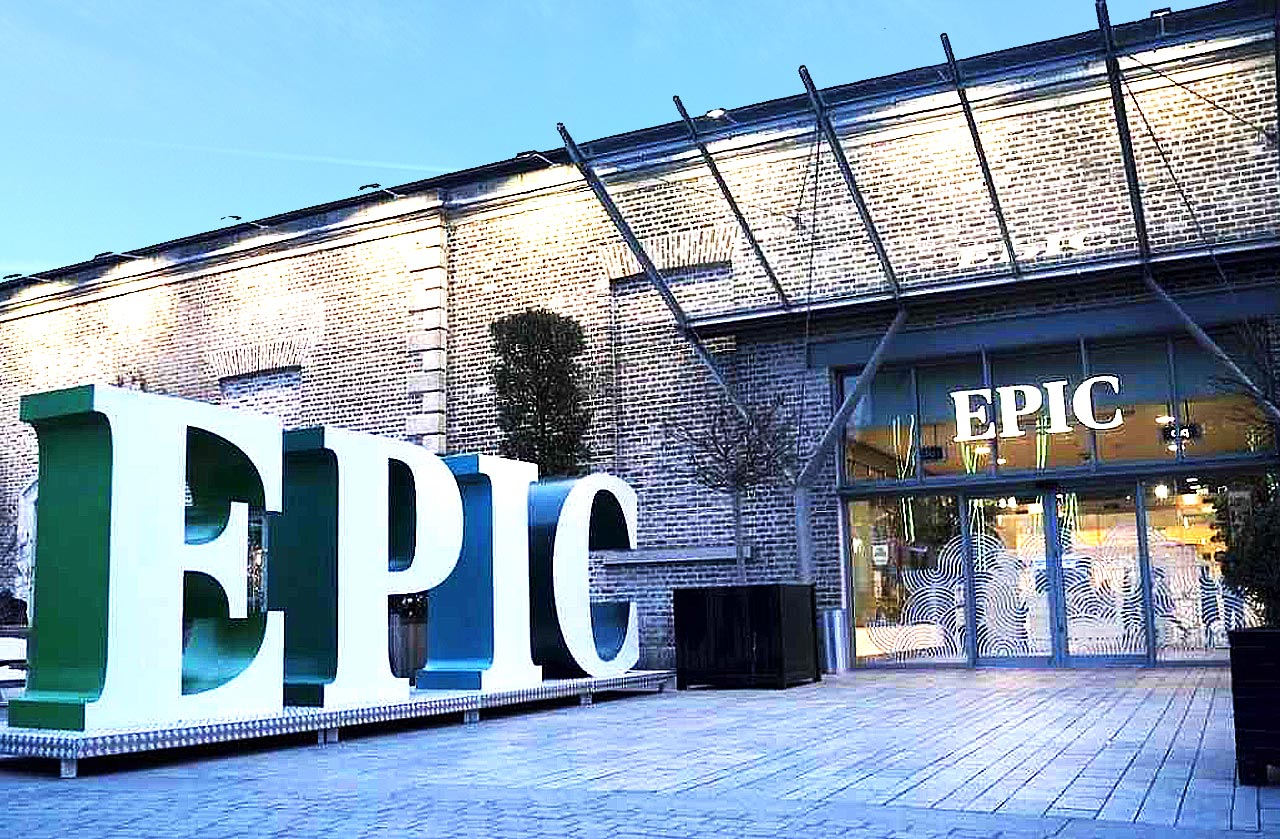
EPIC The Irish Emigration Museum sits within the restored 1820s CHQ Building in Dublin’s Docklands. It is the world’s first fully digital museum. Unlike traditional museums, EPIC utilizes 20 immersive galleries. These spaces feature high-definition touchscreens and motion-sensor displays. The museum narrates the global impact of 10 million Irish emigrants. It occupies the historic Custom House Quay. Thousands of people began their Atlantic journeys from this very spot. The building features subterranean brick vaults and historic ironwork. This architecture provides a stark contrast to the cutting-edge technology inside. The design emphasizes the bridge between Ireland’s difficult past and its modern present.
The museum divides the journey into three sections: Departure, Belief, and Impact. Visitors receive a souvenir “passport” to stamp at kiosks. This allows them to track stories of famous Irish scientists, politicians, and artists. Key exhibits highlight the staggering reach of the Irish diaspora. You can learn about Irish-American presidents and the laborers who built global infrastructure. The site also houses the Irish Family History Centre. Here, visitors use genealogical databases to trace their own roots. EPIC recently won “Europe’s Leading Tourist Attraction” for three consecutive years. It shows how a small island shaped the modern world through its people.
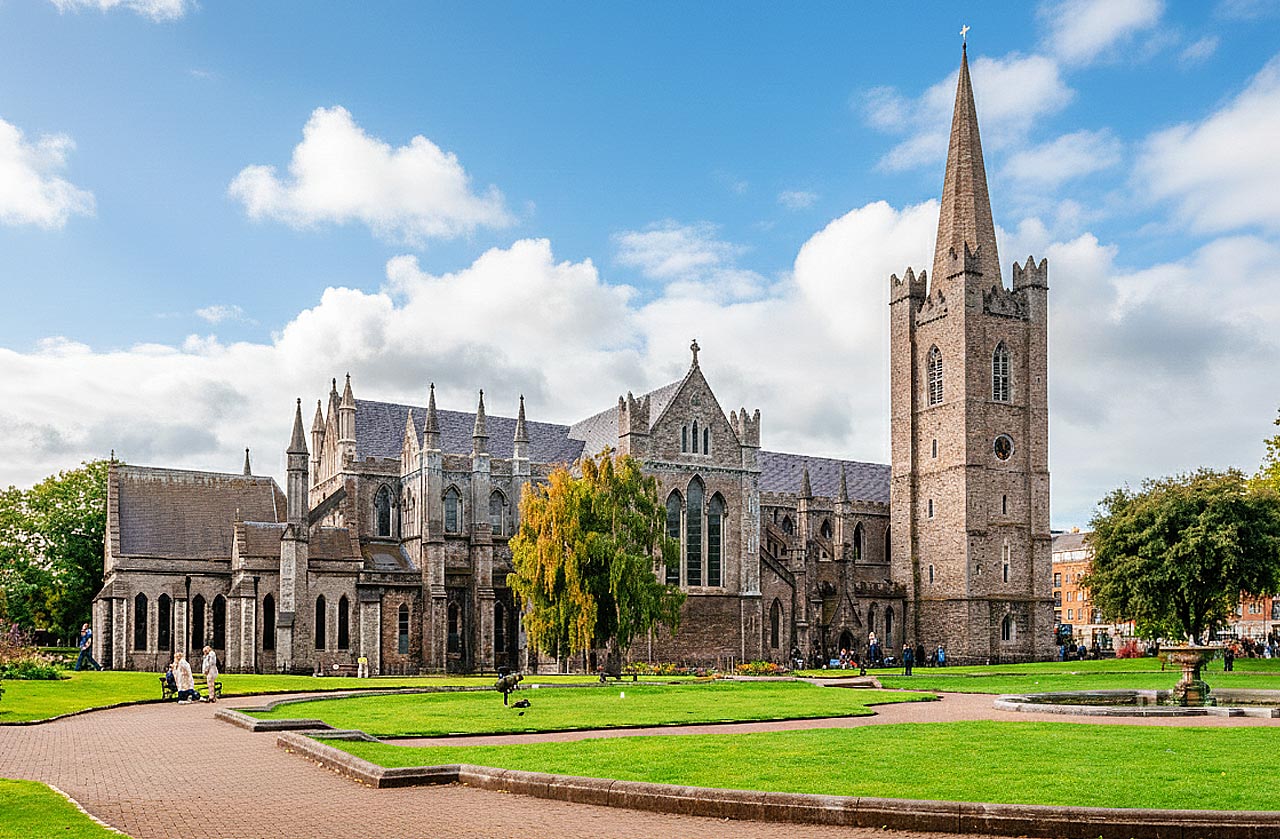
St. Patrick’s Cathedral, the largest in Ireland, dates back to its original build in 1191. The present cathedral structure dates from 1220-1259. Since the Reformation in the 16th century, St. Patrick’s has been the National Cathedral of the Church of Ireland.
In 1901, during the building of St. Patrick’s Park – adjacent to the cathedral – six ancient Celtic grave slabs were uncovered, dating back to the 10th century. Currently on display in the cathedral, one of the slabs was found covering an ancient well, believed to have been used by St. Patrick to baptize pagans into the Christian faith in the 5th century.
Sir Benjamin Lee Guinness funded a major restoration from 1860 – 1865, spending approximately 150,000 pounds on the restoration. His vision changed much of the internal medieval structure. In addition to still serving as a place of worship, the Cathedral also serves as a sprawling museum of history. It contains over 200 monuments and burials. Jonathan Swift, the author of Gulliver’s Travels, lies buried here. He served as the Dean of the Cathedral from 1713 to 1745. His grave sits beside his longtime companion, Stella.
The North Transept houses the famous “Door of Reconciliation.” This 15th-century wooden relic features a hole hacked through the center. It originated from a feud between the FitzGeralds of Kildare and the Butlers of Ormonde. This event created the famous Irish expression “to chance your arm.” Today, the cathedral maintains one of the oldest choir schools in Ireland. This famous choir, along with the choir of Christ Church Cathedral, performed at the world premiere of Handel’s Messiah at O’Neill’s Music Hall here in Dublin in April 1742.
During the medieval period and beyond, Saint Patrick’s magnificent stained-glass windows provided a visual story aide for the illiterate. Designed to be read from the bottom-left pane upward, to the right, and ending in the center. The Saint Patrick’s 19th-century Window illustrates the saint’s life across 39 episodes, beginning with his kidnapping from Wales up to his death and burial.
Notable other works include Sarah Purser’s 1906 “An Túr Gloine,” a depiction of King Cormac of Cashel. Various Guinness family memorials, such as the stained-glass window dedicated to Annie Lee Plunkett – wife of Archbishop Plunkett and daughter of Benjamin Lee Guinness – is inscribed ironically with the inscription “I was thirsty and ye gave me drink.”
St Patrick’s is a wonderful cathedral to visit and provides an excellent audio guide in addition to guided tours after entry. You can see further information on times and booking here.
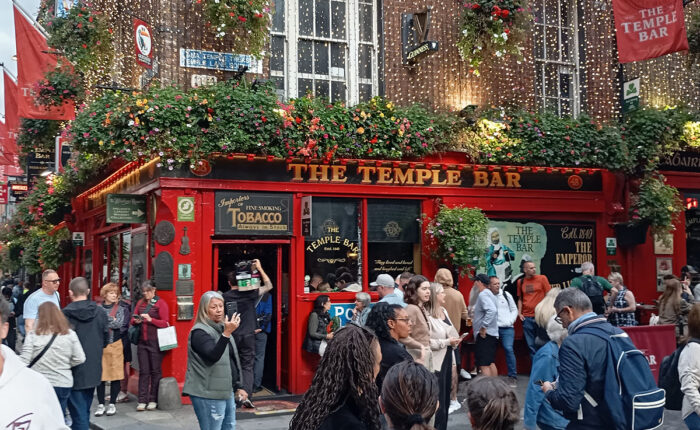
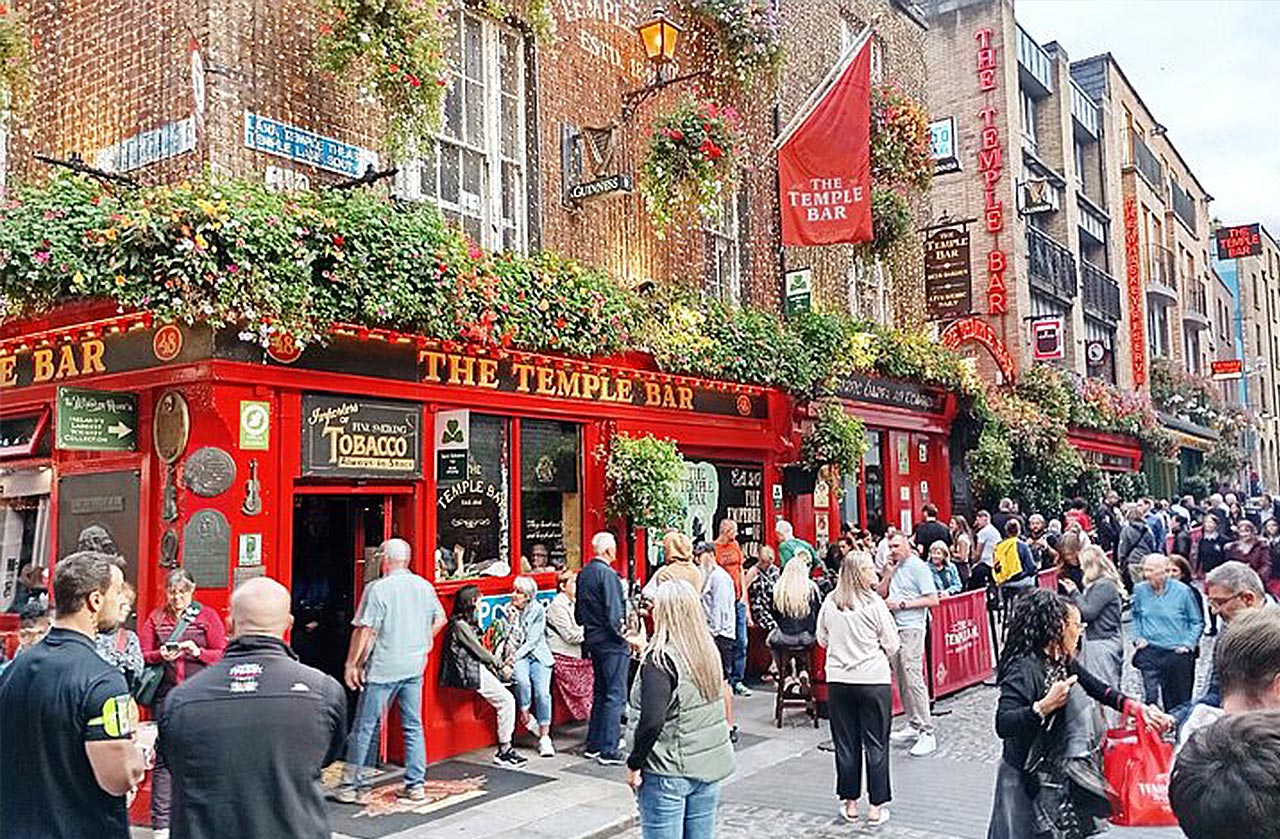
Temple Bar, often referred to as Dublin’s cultural quarter, has a rich history dating back to when the Vikings settled near the area. The name Temple Bar is believed to have originated from Sir William Temple, a member of parliament and the 4th provost of Trinity College who built his residence and gardens here in the early 1600s. This vibrant area is located on the southern bank of the River Liffey and is bounded by Fishamble Street to the west Dame Street to the south and Westmoreland Street to the east.
Temple Bar has been transformed from a historical site to a bustling hub noted for its alleyways and cobblestone streets lined with local pubs, galleries, and theater venues. Temple Bar gained popularity in the mid-1990s as a cultural hotspot and has since held on to its artistic atmosphere amidst ongoing urban development and commercialization.
Offering a diverse range of attractions for visitors such as The Temple Bar Food Market, open every Saturday at Meeting House Square, featuring local artisan foods, crafts, and fresh produce. Visitors can also explore the Irish Film Institute, which hosts film screenings and festivals, or the Photo Museum Ireland for photography enthusiasts. The area is famous for live music, and many iconic pubs, such as The Temple Bar, and the Olivier St. John Gogarty offering traditional Irish music sessions throughout the day and late into the night.
At every corner, opportunities for interactive experiences, such as joining a walking tour, engaging with local art installations, or sampling the local brews at the many pubs lining the lively streets. The Porterhouse (One of my personal favorites) offer a taste of Irish hospitality while showcasing the country’s dynamic craft beer scene.
The atmosphere in Temple Bar is lively, often buzzing with street performances and art displays. Visitors frequently gather at Meeting House Square for open-air events, making it a focal point for community and cultural interaction. Temple Bar not only serves as a nightlife destination but also as a center for art, history, and culinary exploration, making it an indispensable part of any Dublin itinerary.
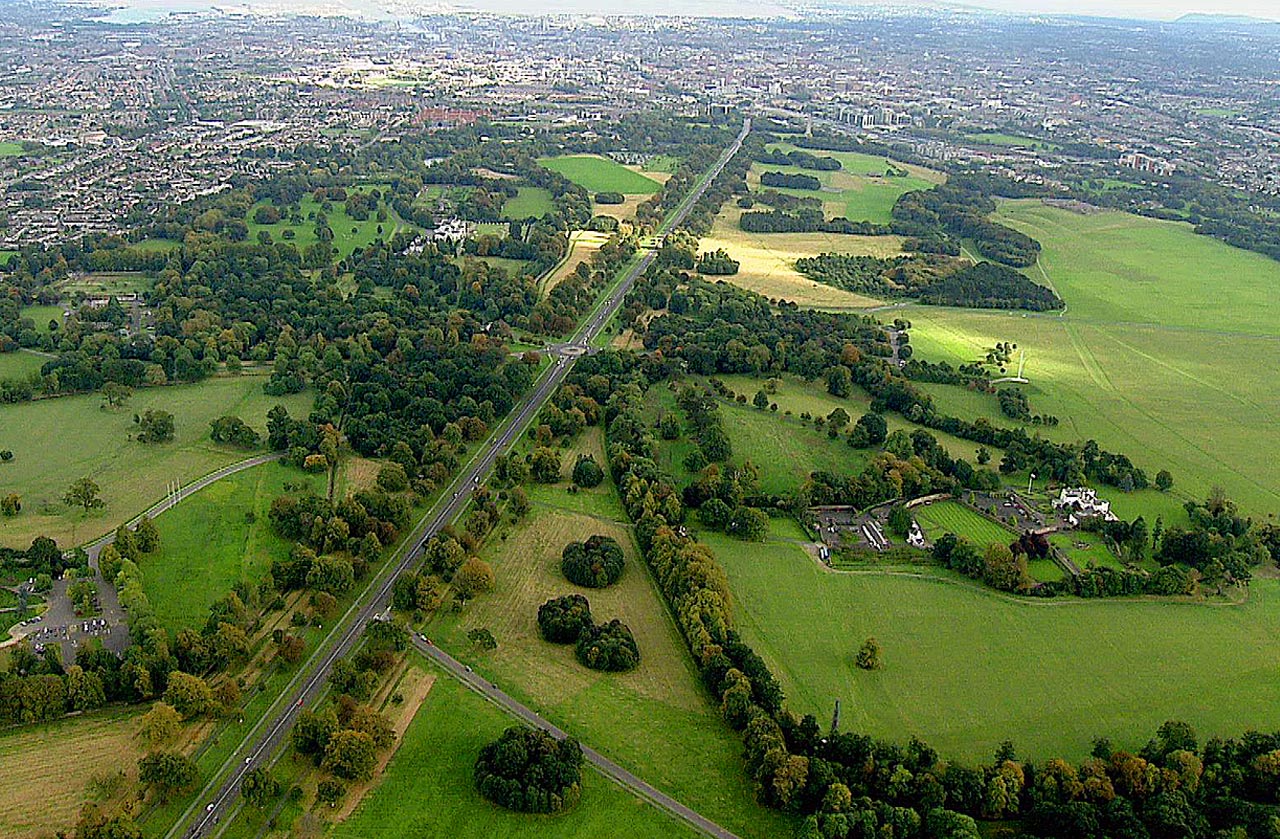
The Duke of Ormond established Phoenix Park in 1662 as a royal deer-hunting park. At 1,750 acres, it is the largest enclosed public park in any European capital. This size is more than double that of New York’s Central Park. For over 350 years, the park has served as a vital “green lung” for Dublin. Lord Chesterfield opened the landscape to the public in 1747. Today, an 11-kilometer wall encloses the park. It protects a diverse ecosystem of woodland and open meadows. The famous wild fallow deer herd still roams the western reaches. These animals are descendants of the original 17th-century herd.
The park serves as a hub of Irish political significance. Within its gates lies Áras an Uachtaráin, the official residence of the President of Ireland and opened to the public by booking an appointment for a free guided tour. Nearby stands the Wellington Monument, the tallest obelisk in Europe at 62 meters. The park also contains the Papal Cross and Dublin Zoo, the fourth oldest in the world.
The Phoenix Park Visitor Centre, offers an exhibition on the park’s history from 3500 BC to the present and includes a charming cafe and restaurant. Adjacent is Ashtown Castle, a tower house likely dating from the seventeenth century but possibly as early as the fifteenth century. Hidden for years within a Georgian mansion, it was rediscovered after the mansion’s demolition in the late 1980s and has since been fully restored for visitors.
Visitors can also tour Farmleigh, the official state guest house for visiting dignitaries. The Guinness family previously owned this grand estate before selling it to the Irish Government. You can explore the park via 14 kilometers of walking and cycling trails. The main entrance at Parkgate Street and Castleknock stay open 24/7 all year round.
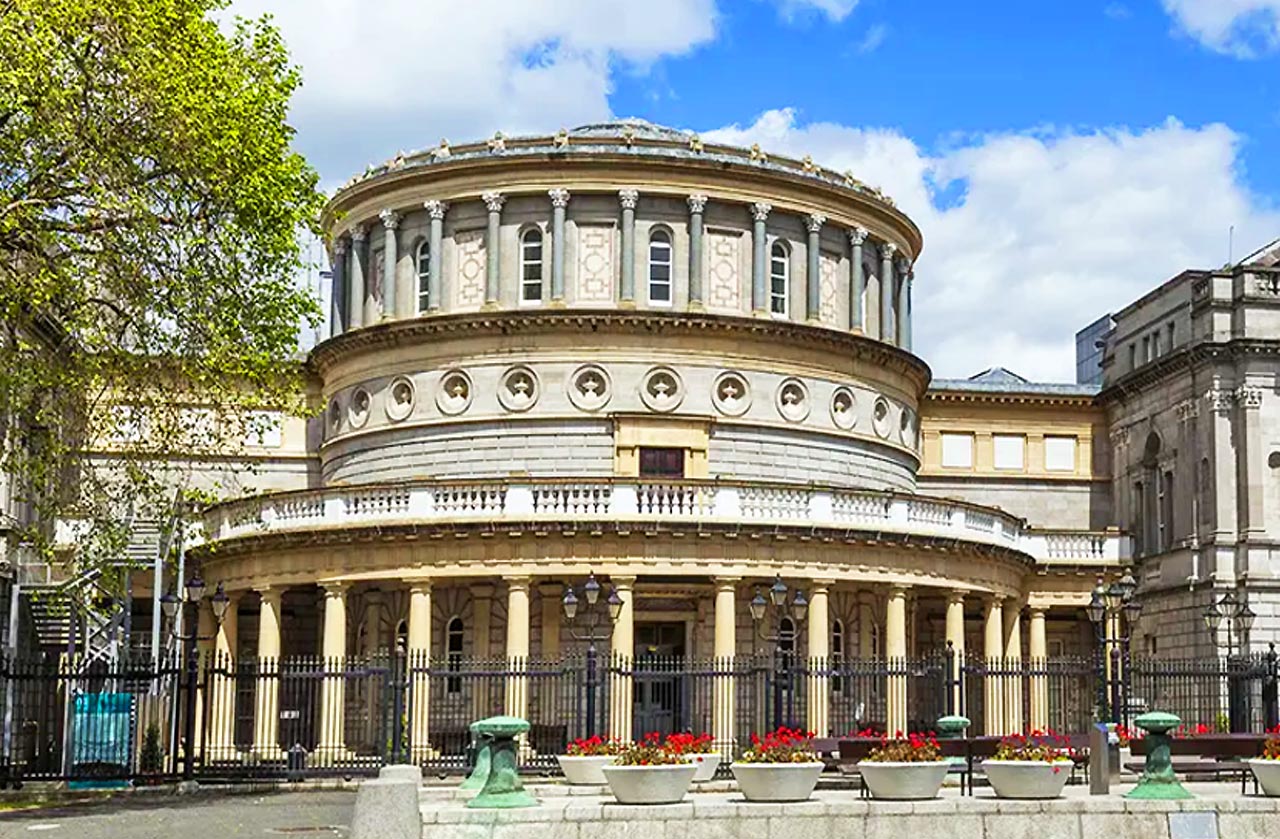
The National Museum of Archaeology on Kildare Street is the nation’s premier repository for historical treasures. Opened in 1890, the building is a masterpiece of Victorian Neo-Classical architecture. It features a grand rotunda and intricate mosaic floors. The museum houses an extraordinary range of iconic treasures. These include the Ardagh Chalice, the Tara Brooch, and the famous Broighter Hoard. From Prehistoric Ireland to Ancient Egypt, visitors can see important artefacts dating from 7000 BC to the 20th century. Admission is free, making it a cornerstone of Dublin’s cultural accessibility.
Highlights include the world-famous Iron Age Bog bodies. These naturally preserved remains offer a haunting glimpse into ritualistic Iron Age life. The Treasury gallery houses an exhibition of prehistoric Irish gold. This collection is one of the most significant in Europe. It showcases the incredible craftsmanship of Bronze Age smiths.
Visitors can also explore the Faddan More Psalter. This early medieval book of psalms was discovered in a Tipperary bog in 2006. The museum offers a year-round programme of workshops, talks, and tours. Whether examining Viking weaponry or the intricate gold torcs of our Celtic ancestors, the museum provides an unparalleled journey through history.